

Introduction
Let’s be honest for a second. Our gardens can look absolutely stunning with pristine lawns and perfectly manicured hedges, but if they’re completely silent, something vital is missing. The world is moving at a breakneck pace, and amidst all the concrete expansion, our tiny, winged neighbors are getting the short end of the stick. That is exactly where the concept of a bee buddy comes into play. It’s not just about throwing a few random seeds into the dirt and hoping for the best; it’s about intentionally crafting a sanctuary.
Being a true friend to the insects isn’t rocket science, but it does require a bit of heart and a dash of creativity. By understanding what makes these incredible pollinators tick, you can transform any ordinary outdoor space into a thriving, buzzing ecosystem. So, grab your gardening gloves, roll up your sleeves, and let’s dive into how you can become the ultimate ally for our fuzzy, flying companions.
Why Our Winged Friends Need a Helping Hand
The Shocking Truth About Pollinator Decline
It is no secret that wild bee buddy populations are facing an uphill battle. Between habitat fragmentation, intensive agricultural practices, and unpredictable weather shifts, these little guys are stressed out. When walking through modern suburban neighborhoods, you mostly see vast expanses of green grass, which, to a hungry insect, is basically a desert.
Without a diverse range of flowering plants, colony health plummets. This isn’t just a crisis for the environment; it’s a massive problem for our dinner plates, too. A huge chunk of the food we consume relies directly on insect pollination. By stepping up and creating a localized refuge, you’re providing a crucial pitstop for weary travelers.
The Ripple Effect in the Local Ecosystem
When you support one element of nature, the positive impact cascades beautifully. Attracting more pollinators means your vegetable patches will yield bigger harvests, your fruit trees will overflow, and local wild plants will propagate naturally. Furthermore, a garden teeming with life attracts beneficial predators like ladybugs and birds, naturally keeping pesky pests in check without the need for harsh chemicals. It is a win-win scenario for everyone involved.
Designing a Garden That Actually Buzzes
The Power of Continuous Blooms
If you want to keep your visitors happy, timing is everything. A common mistake is planting a variety of flowers that all bloom simultaneously in June, leaving the rest of the spring and autumn completely barren. To be a reliable bee buddy, you need to curate a menu that spans the seasons.
- Early Spring: Species like crocuses, pussy willows, and hellebores provide that much-needed energy boost when queens emerge from hibernation.
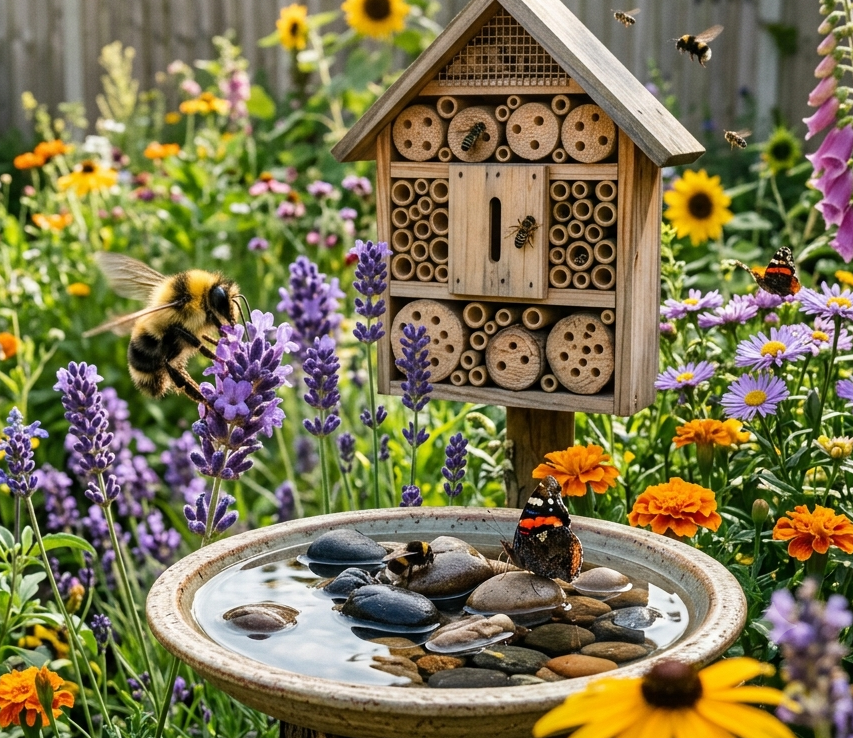
- Mid-Summer: Lavender, echinacea, sunflowers, and borage offer heavy nectar flows during the peak of the colony’s growth.
- Late Autumn: Asters, goldenrod, and sedum help workers stock up on final reserves before the winter chill sets in.
Color and Shape Matter More Than You Think
Believe it or not, these insects have specific visual preferences. Their vision is tuned toward the blue, purple, violet, and yellow ends of the spectrum. Red flowers, while beautiful to us, often appear dark and uninviting to them.
The shape of the bloom dictates who can access the sweet reward inside. Bumblebees, with their robust bodies and long tongues, adore deep tubular flowers like foxgloves. Smaller solitary species prefer flat, open landing pads like daisies or yarrow, where they can easily sip nectar without performing complex acrobatics. Mixing up the architecture of your flowerbeds ensures no visitor leaves empty-handed.
Going Beyond Flowers: Water and Shelter
Crafting the Perfect Hydration Station
Flying all day is exhausting work, and just like us, insects get incredibly thirsty. However, drinking water out in the wild is a risky business. Deep birdbaths or deep puddles pose a serious drowning hazard for small creatures.
Pro Tip: Create a safe watering hole by filling a shallow dish with clean water and packing it with river stones, pebbles, or marbles. Ensure the stones break the surface of the water. This gives your guests a secure place to land, balance, and drink deeply without any danger of slipping under.
Embracing the Beauty of a Messy Corner
Neat freaks, shield your eyes! While a perfectly raked lawn looks tidy, it offers zero protection for wildlife. The vast majority of wild bee buddy species do not live in massive hives; they are solitary creatures that nest underground or inside old wood.
Leaving a small, undisturbed corner of your yard a bit wild can make a world of difference. Toss some fallen logs, hollow twigs, and dry leaves into a pile. Exposed patches of bare, sunny soil are absolutely perfect for mining bees looking to dig out a home for their offspring. By letting nature take the reins in just one small area, you provide premier real estate for the next generation of pollinators.
Ditching the Chemicals for Good
The Hidden Dangers of Cosmetic Pesticides
It’s heartbreaking to realize that many commercial garden products are directly toxic to the very wildlife we want to protect. Systemic insecticides can linger in the soil, leaves, and nectar for months, disorienting foragers and weakening their immune systems.
If you are serious about stepping into the role of a dedicated bee buddy, it’s time to toss those synthetic chemical sprays into the bin. Embracing organic gardening methods might mean tolerating a few aphids here and there, but the payoff of a healthy, living yard is completely worth it.
Natural Pest Management Alternatives
| Pest | Natural Solution | How It Works |
| Aphids | Companion Planting | Plant marigolds or garlic nearby to naturally repel them with strong scents. |
| Slugs | Beer Traps or Copper Tape | Attracts and traps slugs away from vulnerable seedlings without toxic pellets. |
| Fungal Spots | Baking Soda Spray | A mild mix of baking soda, water, and organic soap alters pH levels on leaves to stop fungal growth. |
Getting the Whole Neighborhood Involved
Spreading the Buzz Beyond Your Fence
Once your backyard starts looking like a vibrant nature documentary, don’t keep the secret to yourself! Share cuttings of your favorite pollinator plants with neighbors, host a seed-swap afternoon, or encourage local community spaces to convert unused grassy verges into wild meadows.
Imagine the impact if an entire street linked their gardens together, creating a green corridor through the neighborhood. Suddenly, instead of isolated islands of survival, our towns become vast, interconnected networks where wildlife can move, feed, and thrive safely.
Conclusion
At the end of the day, transforming our outdoor spaces isn’t about achieving perfection. It is about making a conscious choice to share our environment with the incredible creatures that keep our world colorful and fed. By choosing the right plants, offering a safe drink of water, and putting away the chemical sprays, you easily step into the role of a true partner to nature. The rewards are instant—a garden full of movement, vibrant colors, and the soothing hum of life. So, let’s keep planting, keep learning, and make sure every little worker out there finds a welcoming home right in our backyards.
Frequently Asked Questions
Do solitary bees sting?
Hardly ever! Solitary species, like mason or leafcutter bees, are incredibly gentle. Because they don’t have a massive hive or a queen to defend, they are not aggressive at all. Males don’t even possess a sting, and females will only use theirs if they are accidentally stepped on or squeezed. They are completely safe to observe closely up in your garden.
What should I do if I find a tired bee on the ground?
Wow, great question! Nine times out of ten, a stationary insect on the pavement is simply exhausted and needs a quick energy boost. Mix a few drops of white granulated sugar with a splash of water on a spoon and place it gently near the insect’s head. Avoid using honey, as it can contain pathogens that harm wild colonies. Once they drink up the sugary fuel, they are usually back on their wings within a few minutes.
Can I be a helper if I only have a small balcony?
Absolutely! You don’t need acres of land to make a meaningful difference. A couple of window boxes packed with lavender, thyme, or trailing lobelia can serve as a vital pitstop for urban foragers navigating the concrete jungle. Every single flower counts, no matter how high up it is.

