

Introduction
Let’s be honest. When you hear the name Mike Wolfe, your brain instantly conjures up images of dusty barns, rusty oil signs, and the thrill of the hunt. For well over a decade, we’ve watched him crisscross the backroads of America, pulling forgotten treasures out of the shadows on American Pickers. But while the TV show has made him a household name, there is a whole separate fire burning in his belly that most fans are only just starting to catch wind of.
Lately, he hasn’t just been picking history—he’s been buying it, rebuilding it, and breathing new life into entire zip codes. This isn’t just a side hustle or a clever tax write-off; this is the ultimate mike wolfe passion project. It’s a gritty, hands-on obsession with historic preservation that has found its epicenter in the small, sleepy town of Columbia, Tennessee. Turning away from the quick thrill of the flip, he’s gone all-in on a massive, long-term mission to rescue America’s crumbling small towns before they vanish forever.
The Birth of an Obsession: More Than Just a Picker
To understand why someone would pour millions of dollars and countless sleepless nights into old, decaying brick-and-mortar buildings, you have to look at what makes the guy tick. Mike has never just been about the price tag on an item. He’s always been an analyst of human stories, a collector of the ghosts that inhabit our collective past.
For years, driving through the forgotten bypasses of the American landscape, he saw a heartbreaking pattern:
- Vibrant main streets turned into ghost towns.
- Historic architecture bulldozed for vinyl-sided strip malls.
- Local heritages completely erased in the name of progress.
It’s enough to make you scream, right! Seeing that kind of cultural erosion would bum anyone out, but Mike couldn’t just sit back and watch. He realized that buying old motorcycles and porcelain signs was just bandaging a symptom. To actually heal the wound, he needed to save the places where those items were born. That realization is what kicked the doors wide open for a grander vision—the mike wolfe passion project of community revitalization.
Columbia, Tennessee: The Ultimate Canvas
So, out of all the places in the United States, why settle on Columbia? Located just south of Nashville, Columbia was once a bustling hub, but like so many southern rail towns, it hit some incredibly rough patches as the decades rolled on. When Mike rolled into town, he didn’t see a dead end; he saw a diamond in the rough, covered in a thick layer of dust.
Walking the Walk on Main Street
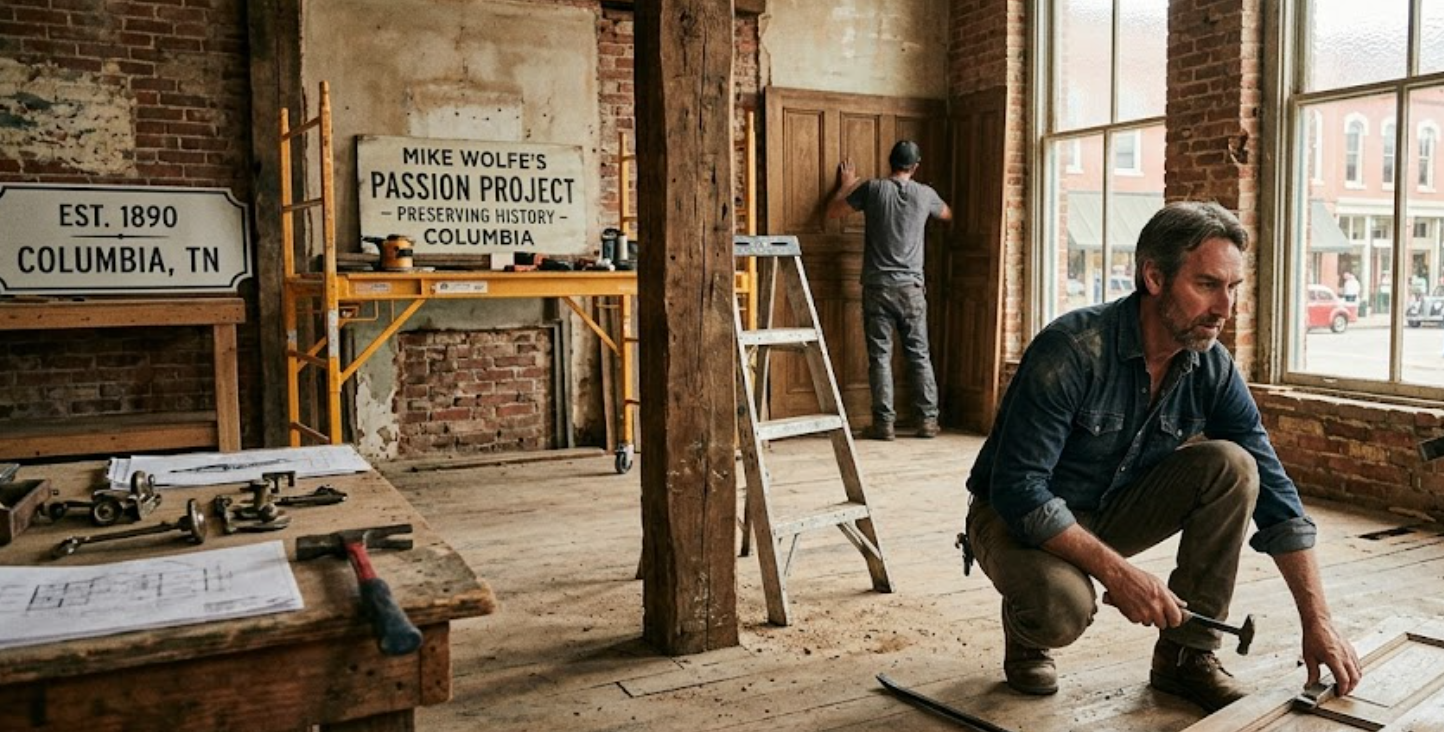
Instead of acting like some big-shot Hollywood investor dropping from the sky to build a flashy tourist trap, he did the exact opposite. He bought historic properties that were quite literally on their deathbeds. We’re talking about buildings with trees growing through the roofs and foundations that were ready to give up the ghost.
Through sheer willpower, a massive chunk of change, and an unyielding respect for original craftsmanship, he started bringing them back. He didn’t modernize them into unrecognizable, sterile boxes either. He kept the weathered brick, the original timber beams, and the soul of the structures intact.
Bringing Commerce Back to Life
Preservation is great, sure, but buildings can’t just be museums; they need people, noise, and commerce to survive. By restoring these spaces, he paved the way for local businesses to thrive:
- The Bicycle Shop: Merging his love for vintage two-wheelers with community spaces.
- Boutique Accommodations: Creating unique lofts that allow travelers to literally sleep inside history.
- Local Artisan Spaces: Giving local entrepreneurs an affordable, gorgeous storefront to display their crafts.
Why This Creative Crusade Passes the Vibe Check
In a world where corporate gentrification is ruining the unique flavor of every cool city, what Mike is doing feels incredibly refreshing. Looking at his work, it’s obvious this isn’t handled by some detached corporate board. It’s got his fingerprints all over it—literally.
“We aren’t just saving old buildings,” Mike has echoed in various ways over the years. “We’re saving the identity of who we are.”
What makes this human-driven narrative stand out so sharply against the backdrop of typical real estate development? It’s the total lack of a cookie-cutter blueprint. Every single rafter, every pane of wavy glass, and every stubborn old door lock is treated like a puzzle piece worth solving. That level of dedication is incredibly rare these days, and honestly, it’s exactly why the community has embraced his efforts instead of fighting them.
Behind the Scenes of a Historic Restoration
Let’s not romanticize this too much, though. Restoring ancient buildings is a total nightmare. Ask anyone who has ever tried to fix up a house built before World War II, and they will tell you horror stories that will make your hair stand on end. Now multiply that by a dozen massive commercial properties.
+--------------------------+--------------------------+
| Challenge Faced          | The Reality On the Ground|
+--------------------------+--------------------------+
| Rotten Support Beams     | Requiring custom timber  |
|                          | sourcing & engineering   |
+--------------------------+--------------------------+
| Outdated Zoning Laws     | Months of bureaucratic   |
|                          | red tape & town meetings |
+--------------------------+--------------------------+
| Skyrocketing Costs       | Spending triple what a   |
|                          | new building would cost  |
+--------------------------+--------------------------+
Uncovering hidden asbestos, dealing with ancient plumbing nightmares, and wrestling with stubborn structural issues, the budget can fly right out the window before you even pick out a paint color. But that’s exactly where the passion part of a passion project earns its keep. If it were easy, anyone would do it. It takes a certain kind of crazy—the good kind—to look at a collapsed roof and see a future thriving coffee shop.
## The Blueprint of the Mike Wolfe Passion Project
If you strip away the camera crews and the celebrity status, what is the actual framework of this movement? It comes down to a simple, repeatable philosophy that other small towns across America can actively steal to save their own Main Streets.
Step 1: Listen to the Locals
You can’t just barge into a town and act like you know what’s best for it. Mike spends hours talking to the old-timers, the people who remember when the town square was booming in the 1950s. Their memories dictate what the buildings want to be.
Step 2: Keep It Authentic
If you peel back layers of ugly 1970s drywall, you usually find gorgeous, hand-carved limestone or heart pine underneath. The goal is always to uncover, not to cover up.
Step 3: Foster Creative Spaces
A town needs a heartbeat. By creating spaces that invite artists, coffee roasters, and independent retailers, you create an ecosystem where people actually want to hang out instead of just driving through.
The Ripple Effect Across Small-Town America
Guess what? It’s working. The revitalization happening in Columbia is sending shockwaves through neighboring counties and inspiring folks across the nation. People are waking up to the fact that their local history is a non-renewable resource. Once it’s bulldozed, it’s gone forever, and no amount of nostalgia can bring it back.
Young entrepreneurs are suddenly moving back to small towns, realizing they can buy a beautiful historic building for a fraction of what a tiny apartment costs in a major metropolis. They’re opening bakeries, breweries, and tech startups inside spaces that used to house dry goods stores a century ago. By showing what’s possible, this incredible initiative has become a beacon of hope for rural economies everywhere.
Conclusion
At the end of the day, Mike Wolfe could easily just ride off into the sunset, count his TV money, and spend his time polishing his massive collection of vintage Indian motorcycles. Nobody would blame him! But that’s just not how he’s wired.
The ongoing mike wolfe passion project is a living, breathing testament to the power of looking backward to find a way forward. It proves that with enough grit, sweat equity, and respect for the past, we can rebuild the broken heart of the American landscape. So, the next time you find yourself driving down a forgotten two-lane highway and pass a decaying brick building, don’t just see a pile of old rubble. Look a little closer—you might just be looking at the next great American comeback story.
Frequently Asked Questions
Where exactly is Mike Wolfe’s main preservation project located?
While he keeps an eye on properties all over the country, the crown jewel of his restoration work is centered in Columbia, Tennessee, which is located about 45 minutes south of Nashville.
Can tourists actually visit and stay in these restored buildings?
Yes, absolutely! Part of the whole concept is making these spaces accessible. Several of his properties feature beautifully restored, vintage-themed lofts available for short-term rentals, allowing you to fully immerse yourself in the historic vibe.
Is he still doing American Pickers while working on these buildings?
You bet! He manages to balance a brutal filming schedule with his real estate and preservation efforts, often finding inspiration (and cool fixtures) for his buildings while out on the road digging through old barns.

