

Introduction
Let’s be real for a second: when Dead by Daylight first dropped, nobody looked at a lumbering, blood-drenched maniac wielding a rusty cleaver and thought, “Wow, I can’t wait to see a breathtaking, watercolor portrait of him holding a teacup.” And yet, here we are. Over the years, Behaviour Interactive’s asymmetrical horror hit hasn’t just spawned a massive competitive player base; it has fueled one of the most fiercely passionate, incredibly talented, and delightfully chaotic artistic communities on the internet.
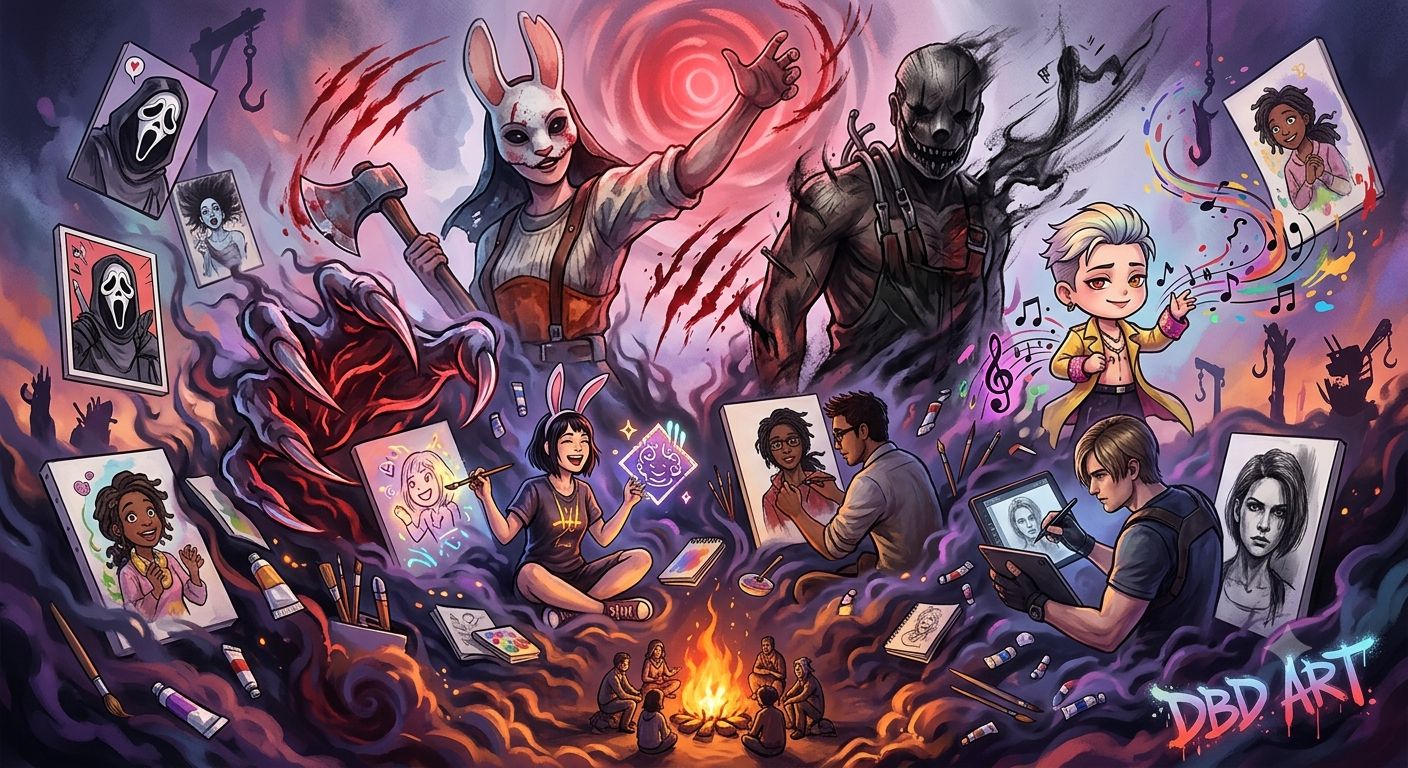
The phenomenon of dbd art is a wild beast. It ranges from spine-chilling, hyper-realistic illustrations that make you want to leave the lights on, to adorable, chibi-style comic strips that completely strip away the horror and replace it with pure, unadulterated comfort. But what is it about this specific game that makes artists pick up their digital styluses and paintbrushes in droves? Why does a game rooted in endless torment, visceral hooks, and desperate generator repairs inspire such a beautiful, sprawling renaissance of creativity?
Grabbing a mug of coffee and settling in, let’s peel back the layers of the Fog to see how a community took a nightmare and turned it into an absolute masterpiece.
The Recipe for an Artistic Nightmare: What Makes the Characters Click?
To understand why dbd art dominates platforms like Twitter (X), Tumblr, and Reddit, you have to look at the raw ingredients the developers give the community. Dead by Daylight doesn’t just give you generic archetypes; it drops you into a goldmine of distinct visual storytelling.
A Masterclass in Silhouette and Costume Design
Every single Killer in the game is designed with a striking silhouette. Whether it’s the towering, bunny-masked presence of The Huntress or the twitching, uncanny-valley contortions of The Unknown, you know exactly who you’re looking at within a fraction of a second. For an artist, this is pure gold. It provides a rock-solid foundation to build upon, allowing them to experiment with lighting, dramatic shadows, and dynamic poses while keeping the character instantly recognizable.
The Contrast of Vulnerability and Terror
On the flip side, you have the Survivors. They aren’t faceless soldiers; they are everyday people (plus a few legendary licensed characters) thrown into a horrific situation. This creates a brilliant emotional contrast that artists love to exploit. You’ll see pieces focusing heavily on the gritty, sweat-and-dirt-covered trauma of a trial, contrasted immediately by wholesome fan art of the characters resting around the campfire, sharing a rare moment of peace. It’s that emotional duality that keeps the community hooked.
Evolution of Style: From Grimdark Horror to Cozy Campfire Vibes
If you scroll through the history of the community’s creative output, you’ll notice that it doesn’t just stick to one lane. Oh no, it branches out into some truly unexpected territories.
1. The Purist Horror Aesthetic
Naturally, a huge chunk of the community stays true to the game’s roots. This side of the fandom specializes in capturing the atmospheric dread of the Entity’s realms. Think heavy textures, dripping blood, glowing red scratch marks, and lighting that looks like it was ripped straight out of an 80s slasher flick. Artists love pushing the boundaries of body horror with characters like The Plague or The Blight, showcasing the grotesque beauty of their affliction.
2. High Fashion and Cosmetics Reimagined
Let’s face it, Dead by Daylight has secretly become a fashion simulator. With hundreds of cosmetics available in-game, the artistic community often takes these outfits and runs a marathon with them. Have you ever wanted to see The Trickster looking like he’s walking the runway at Paris Fashion Week? Or perhaps Feng Min sporting a completely original, fan-designed streetwear look? The community handles it with ease, frequently outpacing official designs with sheer, stylish flair.
3. The “Wholesome Fog” Phenomenon
Perhaps the most entertaining aspect of the fandom is its collective decision to turn terrifying monsters into absolute sweethearts. A massive sub-genre of dbd art revolves around slice-of-life comics and domestic scenarios. Seeing Ghostface bickering with Dwight over who burnt the toast, or The Trapper gently teaching a new Survivor how to loop a structure is a level of wholesome irony that you just can’t help but love. It’s a testament to how much the community has internalized these characters, treating them more like a chaotic, extended family than enemies in a murder simulator.
The Power of Community Hubs: Where the Magic Happens
Art doesn’t exist in a vacuum, and the places where these creators gather are just as fascinating as the work they produce.
- Twitter/X (The Fast-Paced Gallery): This is where trends spark. An artist drops a breathtaking piece of The Artist, it gets thousands of retweets, and suddenly a whole new wave of inspiration washes over the community. It’s fast, chaotic, and heavily driven by character ships and patch updates.
- Reddit (The Critic and the Fan): On subreddits like r/deadbydaylight, creators share their work with the broader player base. Here, you get a mix of memes, high-effort cosplay, and gorgeous digital paintings, often sparking deep discussions about lore.
- In-Game Recognition: Behaviour Interactive actually does something a lot of major studios fail at—they actively celebrate their creators. Through community art contests, official cosmetic design competitions (where fan-made outfits actually get put into the game), and showcasing fan art during live streams, the developers have created a ecosystem where artists feel seen and valued.
Looking at the Impact of Licensed Lore on Creator Inspiration
When Dead by Daylight started pulling in heavy hitters like Michael Myers, Leon S. Kennedy, Ellen Ripley, and Vecna, the floodgates didn’t just open—they completely shattered.
Bringing these iconic universes together under one roof acts like a massive sandbox for creators. Where else on earth are you going to see a beautifully rendered crossover piece where Cheryl Mason from Silent Hill is casually sharing a juice box with Alan Wake? The lore of the Entity pulling people from different timelines and dimensions gives artists a literal blank check to create whatever narrative they want. It bridges fandoms that otherwise would never have crossed paths, injecting a constant stream of fresh eyes and new talent into the creative space.
The Challenges of Being a Creator in the Fog
It’s not all sunshine and rainbows, though. Creating content for a massive, highly opinionated gaming community comes with its own unique set of hurdles.
Mainly, the community can be incredibly protective of their favorite characters and “ships” (romantic pairings). An artist drawing a particular duo might find themselves receiving immense love from one side of the fandom, while simultaneously getting hit with bizarre backlash from another. Navigating those waters requires a thick skin. Furthermore, keeping up with the relentless pace of a live-service game—where a new chapter drops every three months—means artists are constantly racing to draw the newest, shiniest character before the hype train leaves the station. It’s a grueling pace, yet the sheer volume of high-quality work never seems to dip.
Frequently Asked Questions about Dead by Daylight Creative Culture
What exactly counts as “dbd art”?
It encompasses any creative visual medium inspired by the game. This includes digital paintings, traditional sketches, 3D renders, cosplay photography, handcrafted clay models, and even custom-designed in-game perks and icons that players can use to customize their user interface.
Can fans submit their own designs to be put into the game?
Yes! Behaviour Interactive periodically holds Community Cosmetic Contests. The developers select finalists from hundreds of fan submissions, the community votes on their favorites, and the winning designs for both a Survivor and a Killer are built by the devs and added to the game’s store for everyone to enjoy.
Why is there so much anime-style fan art for a western horror game?
Horror and anime aesthetics have a long history of blending beautifully together. The expressive nature of anime and manga art styles allows creators to emphasize either the extreme, stylized terror of the Killers or the emotional, dramatic reactions of the Survivors, making it a perfect fit for the fandom.
Where is the best place to find custom UI icon art?
Websites like Dead by Daylight Icon Toolbox (or various dedicated community Discords) are the go-to hubs. Countless talented pixel artists and graphic designers create custom perk packs, completely transforming the look of the game’s menus with unique themes.
Conclusion: The Fog May Fade, But the Art Is Eternal
At the end of the day, Dead by Daylight is a game about cycles. You load into a match, you fight to survive or hunt to kill, the match ends, and the cycle repeats. It’s a loop that could easily become stale. However, what keeps the heart of this franchise beating so fiercely isn’t just the balance patches or the new map releases—it’s the community’s refusal to let these characters stay confined to the screen.
Through the endless library of dbd art, players have given these pixels a genuine soul. They’ve built complex backstories, explored hidden friendships, and given a terrifying world a sense of vibrant, chaotic, and beautiful life. As long as the Entity keeps pulling souls into the Fog, you can bet your bottom dollar that the artists will be right there waiting in the shadows, brushes poised, ready to capture every single moment of the beautiful nightmare.

