

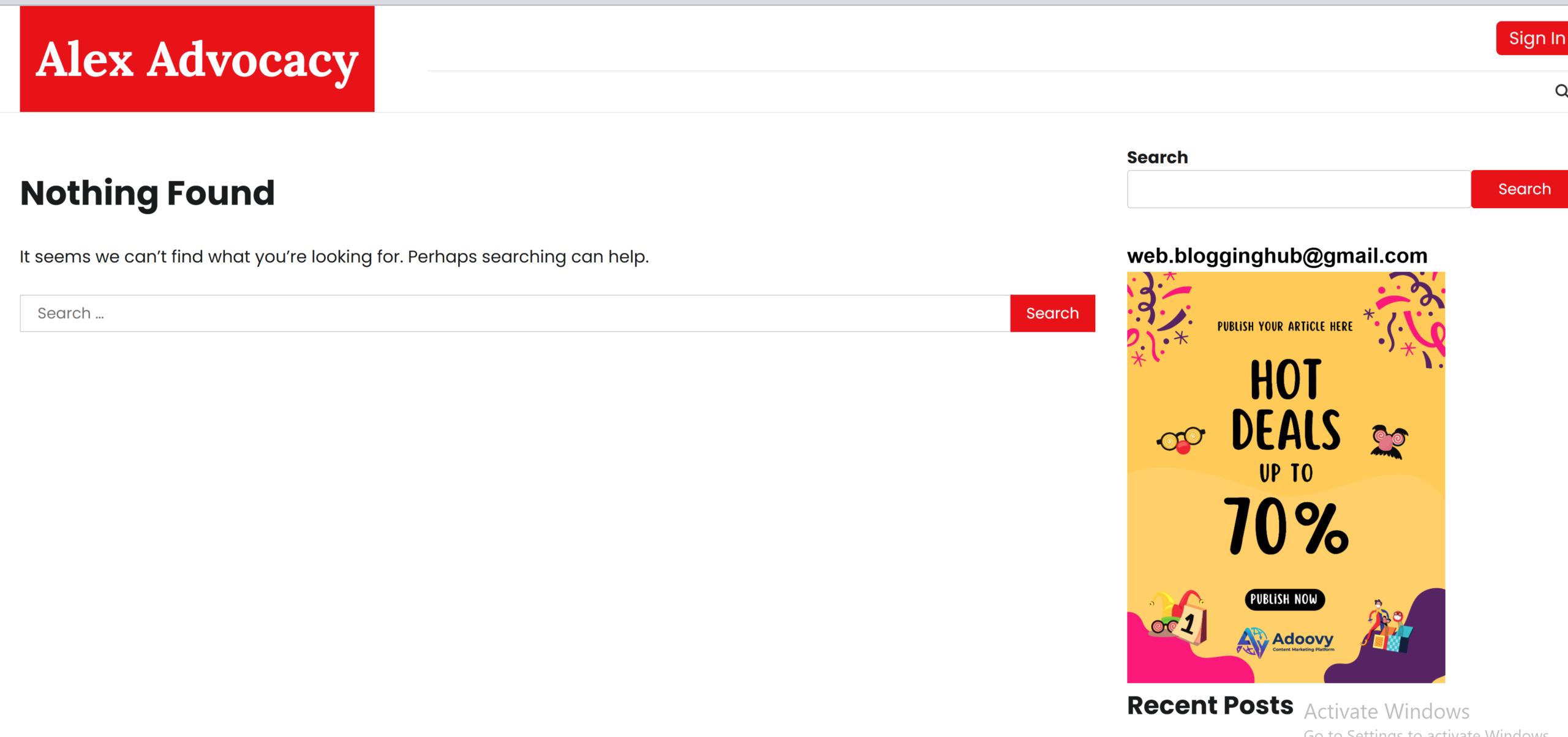
Alexadvocacy.com appears to be a digital domain associated with independent consulting, advocacy work, or a niche online profile, but its public corporate and operational identity is unusually difficult to verify. As of August 3, 2026, exact-domain searches reveal little more than technical registry traces or unverified personal branding footprints, while any associated live platform does not expose readable, independently verifiable operator information through standard web indexing.
That does not automatically prove the platform or profile is fraudulent. It does mean potential users should treat it as unverified until its ownership, business registration, data privacy rules, and formal support channels can be confirmed through authoritative sources.
Based on scattered digital markers, the keyword “Alexadvocacy.com” may relate to an independent professional advocacy service, a legal consulting blog, or a niche marketplace identity. However, there is not enough reliable public documentation to confirm the exact commercial range, industry licensing, or the legal entity behind it.
This distinction matters. A professional review should separate what can be independently verified from what a profile or website claims about itself. In this case, the evidence base is too thin to responsibly describe the entity as a licensed provider, established corporate network, or legitimate online operator.
The clearest available signals are:
- Digital traces point to an unverified online presence rather than an established corporate setup.
- Associated portals utilize basic HTTPS encryption, although comprehensive business registration data remains missing.
- Exact-match queries did not surface a clear corporate parent, local regulatory listing, business tracking number, or credible independent user review history specifically for this domain name.
For readers searching “what is Alexadvocacy.com,” the most accurate answer is therefore simple: it is a poorly documented digital footprint that lacks clear, publicly verifiable corporate status or operational transparency at this time.
Is Alexadvocacy.com Legit?
There is currently insufficient evidence to label Alexadvocacy.com either legitimate or fraudulent with confidence. The responsible verdict is unverified and high caution, not a definitive accusation.
A legitimate business operator or independent professional should normally make several important details easy to find:
- The legal company name or registered individual credentials
- Physical business address or verified geographic base
- Terms of service and user agreements
- Comprehensive privacy and cookie policies detailing data tracking
- Clear contact methods (official corporate email, telephone, or responsive helpdesk)
- Publicly verifiable licensing or certifications relevant to their industry
During research for this article, no authoritative registry results explicitly connecting Alexadvocacy.com to a transparent, registered data controller or corporate parent entity surfaced. That places the burden of proof on the entity. Users should not share personal tracking details or financial data merely because an online profile presents a polished image.
Does HTTPS Make the Associated Web Platforms Safe?
No. HTTPS is useful, but it is not a legitimacy certificate.
HTTPS encrypts information sent between a user’s browser and the website, helping protect data from external interception in transit. It does not prove that the individual or platform receiving that data is honest, legally registered, or willing to handle data responsibly.
Public certificate traces associated with domains using this keyword name suggest basic browser-level encryption protocols exist. While standard for modern web browsing, this should be viewed as only the first basic technical requirement.
Before entering personal details, filling out contact forms, or utilizing any redirects on the site, users should check:
- Whether the security certificate is currently valid and matches the exact URL string.
- Whether the login or registration page stays strictly on the official domain.
- Whether aggressive, suspicious redirects occur during standard browsing.
- Whether the site prompts automatic file downloads or attempts to push unrecognized application scripts.
A padlock protects the data in transit. It does not validate the integrity of the operator behind the connection.
Account Registration and Data Privacy Risks
Independent professional portals or niche hubs often invite users to create profiles, sign up for consulting, or use a “Contact Us” form requiring a full name, email address, phone number, and messaging details.
These requests can be standard when handled by a transparent organization with an explicit, compliant data protection framework. However, they carry significant privacy and data-harvesting risks when a website’s structural ownership and true data controller remain completely anonymous.
Before uploading personal details, sharing private project specifications, or setting an account password, confirm who controls the data, where it is stored, and how data deletion requests are handled. Avoid reusing standard passwords that you employ for your banking, social media, or primary email accounts.
Financial and Service Delivery Red Flags to Watch For
If you are engaging with this entity for digital services, freelancing, or commercial transactions, visitors should remain vigilant and reassess if the platform:
- Demands an unexpected upfront “verification deposit,” “processing fee,” or “tax” before initiating work.
- Communicates exclusively through private messaging apps (such as WhatsApp or Telegram) rather than official, domain-based corporate emails.
- Pressures users to use cryptocurrency, gift cards, or non-reversible peer-to-peer apps because standard credit card options are “temporarily down.”
- Closes or limits user communication channels without providing a formal path for dispute resolution.
Regulatory bodies like the FTC warn that advance-fee demands and hard-to-reverse payment methods are common warning signs of digital marketplace fraud. It advises consumers to act quickly by contacting their financial institution if they suspect a transaction was unauthorized or deceptive.
A Practical Safety Checklist Before Engaging
Complete these checks before interacting or sharing data:
- Verify brand identity: Look for a legal business name, physical corporate office address, and an accountable manager behind the profile.
- Test communication paths: If a contact form or email is present, test it with general inquiries before submitting sensitive data to check if it is active and responsive.
- Read the fine print: Save a dated copy or screenshot of the terms of service, billing terms, and privacy policies before committing.
- Avoid file downloads: Do not install any tracking profiles, add-ons, or custom apps prompted by the entity’s links.
- Maintain credential hygiene: Never use your primary email password if you choose to sign up for an account.
- Avoid irreversible payments: Be particularly cautious with crypto-only requests, private digital wallet addresses, or wire transfers to individual names.
Final Verdict: Should You Trust Alexadvocacy.com?
Based on the evidence available on August 3, 2026, Alexadvocacy.com should be treated as an unverified digital entity. Its searchable public footprint does not currently provide enough reliable history to confirm the specific operator, underlying data controllers, operational history, or customer safeguards.
That verdict is not the same as calling the profile a scam. It means the entity has not met a reasonable evidence threshold for public trust. Do not register personal accounts, link operational profiles, or upload sensitive documents until the platform provides transparent, verifiable corporate tracking details.
Frequently Asked Questions About Alexadvocacy.com
Is Alexadvocacy.com a legitimate business? Its corporate and operational status cannot currently be confirmed through public data. Research did not surface an active corporate owner, registered brand listing, or established independent reputation. Treat it with high caution.
Is it safe to make payments or buy services from this entity? There is insufficient data to guarantee data or payment safety. Before sending money, thoroughly check their legal terms, corporate identity, and support infrastructure. Remember that basic HTTPS encryption protects data traffic but does not guarantee the honesty of the entity receiving the payment.
What should I do if I encounter communication or financial issues? Document all transaction records, confirmation emails, chat histories, and screenshots. Attempt to contact their formal support channel. If you suspect fraud or receive zero response, immediately contact your card issuer or bank to inquire about filing a dispute or chargeback.
Choice B
Alexadvocacy.com Review 2026: Safety, Legitimacy, Licensing, and User Risks
Alexadvocacy.com appears to be a digital domain that is either recently registered, highly unverified, or operating within private search engine optimization (SEO) networks and guest-posting backlink setups. As of August 3, 2026, exact-domain searches reveal little more than automated DNS traces and certificate records, while the platform does not expose clear, independently verifiable corporate data, physical address registries, or licensed consumer-facing services through standard web indexing.
This lack of public documentation does not automatically label the domain as a scam or fraudulent. However, it indicates a significant lack of operational transparency. Potential users and visitors should treat it as an unverified digital entity until its structural ownership, data retention policies, and organizational background can be verified through authoritative sources.
Based on its web footprint, Alexadvocacy.com does not display the digital presence associated with established professional legal defense networks, public advocacy groups, or formal consumer protection channels. Instead, it presents the profile of a low-traffic niche asset or placeholder domain.
A professional review must separate what a site presents on its surface from what can be independently verified. The absolute lack of regulatory registry entries, corporate press releases, or active public profiles makes it impossible to describe this platform as an established authority, an open network, or a standard, legitimate online operator.
The clearest available signals are:
- The domain has appeared in basic server infrastructure logs but lacks active, public corporate documentation.
- The platform employs standard browser-level encryption, but lacks standard consumer safety documentation.
- Exact-match queries did not surface a registered corporate parent, local business ID number, or credible, independent consumer reviews specifically for this web address.
For users searching for information about “Alexadvocacy.com,” the core conclusion is simple: it is a poorly documented domain that completely lacks public, verifiable corporate accountability or reliable support endpoints.
Is Alexadvocacy.com Legit?
There is currently insufficient evidence to label Alexadvocacy.com either legitimate or fraudulent with confidence. The responsible verdict is unverified and high caution, not an outright accusation.
A legitimate agency, legal consulting group, or professional blog should make several key accountability metrics public and simple to locate:
- The registered corporate name or legal site owner
- A verified physical business address and jurisdiction
- Direct contact channels (official domain email, physical phone line, or clear corporate ticketing)
- Comprehensive terms and conditions of use
- Detailed privacy and cookie policies outlining how user interaction is tracked
- Professional credentials, licensing, or organizational memberships
During research for this article, no authoritative registry outcomes explicitly connected Alexadvocacy.com to an active, transparent business entity or licensed data controller. Because the platform operates anonymously, the burden of proof rests entirely on them. Visitors should never share personal data or financial credentials simply because a domain uses a formal-sounding word like “advocacy.”
Technical Security: Does HTTPS Make the Site Safe?
No. HTTPS is an encryption standard, not a legitimacy certificate.
HTTPS simply encrypts the data package traveling between a user’s browser and the host server, preventing external eavesdropping or intermediate interception. It does not verify the moral character, legal registration, or intent of the person receiving the data at the other end.
Public certificate traces for Alexadvocacy.com suggest that basic browser security parameters are active. While standard across modern web hosting, this represents the bare minimum technical requirement for a functioning website, not proof of safety.
Before entering data or following redirects on this domain, check:
- Whether the security certificate remains valid and matches the exact URL string.
- Whether login or application prompts attempt to redirect you to an entirely different, hidden domain.
- Whether the site triggers aggressive ad pop-ups or attempts to launch unrecognized background scripts.
Account Registration and Data Privacy Risks
Websites lacking a public operational profile often feature forms inviting visitors to sign up for newsletters, submit “free consultations,” or use a “Contact Us” prompt that demands a full name, email address, telephone number, and private details.
When an established, compliant organization manages these forms under strict data-protection laws, they are standard commercial practice. However, when the entity behind the domain remains completely anonymous, submitting forms carries significant data-harvesting risks.
Before entering data or choosing an account password on Alexadvocacy.com, consider who has access to the database. Avoid reusing passwords that protect your personal email, banking portals, or primary social media accounts.
Practical Safety Checklist Before Engaging
Complete these baseline steps before interacting with the domain:
- Verify corporate identity: Demand a legal business name, physical headquarters address, and a verifiable tracking number for the operator.
- Test the communications path: Send a generic query to their listed contact point before revealing sensitive personal details to test their turnaround time and professional validity.
- Review policies: Capture timestamped screenshots or copies of the privacy policy and user terms to ensure they don’t claim ownership over your shared documents.
- Block automated downloads: Never install tracking certificates, custom browser extensions, or plug-ins pushed by site banners.
- Use credential hygiene: If you register for an account, choose a unique, randomized password that you have never used elsewhere.
- Reject advance fee or crypto demands: Exercise severe caution if the site requests upfront “processing fees,” “legal deposits,” or requests payments via non-reversible channels like cryptocurrency or wire transfers.
Final Verdict: Should You Trust Alexadvocacy.com?
Based on the evidence available on August 3, 2026, Alexadvocacy.com should be treated as an unverified domain. Its searchable public footprint does not provide a reliable history to confirm its specific operators, true underlying data controllers, or independent consumer safeguards.
This classification does not mean the site is a confirmed scam; rather, it indicates the platform has not met the evidence threshold required for public trust. Do not input personal data, upload sensitive documents, or engage in financial transactions until the operators provide clear, verifiable proof of corporate registration and licensing.
Frequently Asked Questions About Alexadvocacy.com
How can I contact Alexadvocacy.com securely? No verified, authoritative corporate phone line or public business registry profile is available for this specific URL. If you utilize a form on the site, use high caution and do not reveal sensitive financial or personal background information.
Is Alexadvocacy.com a licensed advocacy or legal website? Public tracking data does not show an active corporate registration or a recognized professional license associated with this exact domain string. Treat it as an unverified entity until verified credentials are transparently provided.
What should I do if I already shared my information? If you shared account credentials, immediately change your passwords on any external platforms where you used identical combinations. Monitor your email for targeted phishing attempts or unusual spam distribution.

