


Thermal paper rolls are an essential consumable for businesses that rely on fast, dependable receipt printing. Supermarkets, restaurants, retail stores, banks, pharmacies, hotels, logistics companies, and payment service providers use them every day. Although an individual roll may seem inexpensive, purchasing thousands of rolls over several months can represent a significant operating cost. For wholesalers, distributors, and large-volume buyers, finding a reliable manufacturer offering a competitive thermal paper roll factory direct price can make a noticeable difference to purchasing budgets and profit margins.
Buying directly from a factory can reduce unnecessary intermediary costs, improve communication, and provide greater control over product specifications. However, the lowest quotation is not automatically the best deal. Paper quality, roll dimensions, coating performance, packaging, order quantity, and delivery arrangements all influence the actual value of an order.
For businesses sourcing thermal paper from China or other manufacturing markets, understanding these factors makes supplier selection easier. This article explains how factory-direct pricing works, what affects the cost of thermal paper rolls, and how to evaluate a manufacturer before placing a wholesale order.
What Does Thermal Paper Roll Factory Direct Price Mean?
A factory-direct price is a quotation provided by the manufacturer rather than a reseller or trading intermediary. The buyer communicates with the production company, discusses the required specifications, and receives pricing based on the product, order quantity, customization requirements, and shipping arrangements.
This purchasing model can offer several advantages:
- Fewer intermediary costs: Buying directly from a manufacturer may reduce additional margins charged by distributors or trading companies.
- Better specification control: Buyers can discuss paper width, roll diameter, length, core size, and paper grade with the production team.
- More direct communication: Questions about samples, packaging, printing, and production schedules can be addressed with the supplier.
- Bulk purchasing opportunities: Manufacturers may offer more competitive rates for repeat orders and larger quantities.
- Customization options: Businesses can discuss private-label packaging, printed receipts, and product specifications.
The final price still depends on the supplier’s production capabilities and commercial terms. Buyers should compare quotations on an equivalent basis rather than assuming that every factory-direct offer includes the same product quality or services.
What Factors Affect the Factory Price of Thermal Paper Rolls?
Thermal paper roll price are influenced by several production and purchasing variables. Understanding them helps buyers request accurate quotations and avoid unexpected costs.
1. Paper GSM and Raw Material Quality
GSM, or grams per square metre, measures the weight of the paper. Thermal rolls are available in different paper weights, depending on the printer, application, and customer requirements.
A higher GSM does not automatically guarantee better printing performance. Buyers should also consider the paper’s coating quality, surface smoothness, sensitivity, and resistance to fading. A suitable grade should provide clear printing without causing unnecessary wear on the printer head.
Manufacturers may offer different grades for everyday receipts, high-volume retail printing, and specialized applications. Selecting the right grade is often more cost-effective than simply choosing the heaviest paper available.
2. Roll Width, Diameter, and Paper Length
Dimensions have a direct effect on material consumption and the number of rolls produced from a jumbo roll. Common thermal paper sizes include:
| Thermal roll size | Common application |
| 80 × 80 mm | POS systems and retail receipt printers |
| 80 × 70 mm | Cash registers and billing machines |
| 57 × 50 mm | Card terminals and compact receipt printers |
| 57 × 40 mm | Small billing and payment devices |
| 3 1/8-inch rolls | Retail and restaurant POS printers |
| 2 1/4-inch rolls | Credit card and portable receipt printers |
These are common formats, not universal requirements. Before ordering, buyers should confirm the printer’s supported roll width, maximum diameter, core size, and paper length.
A roll that looks similar to the original may still cause feeding problems if its dimensions are incorrect. Accurate specifications help prevent product returns and customer complaints.
3. Order Quantity and Production Volume
Order quantity is one of the most important factors in wholesale pricing. Larger orders may allow a factory to use raw materials and production capacity more efficiently. This can lower the unit cost, although the exact discount depends on the product and order conditions.
Distributors should consider their expected sales volume before placing an order. Purchasing too little may increase the cost per roll, while purchasing more than the business can store or sell may create unnecessary inventory expenses.
A practical approach is to request quotations for several quantity levels, such as an initial order, a medium-volume order, and a full container order. This makes it easier to compare the pricing structure.
4. Printing, Packaging, and Customization
Plain white thermal rolls are generally simpler to manufacture than products requiring additional printing or custom packaging. Buyers may request printed logos, promotional messages, branded wrappers, customized carton labels, or private-label packaging.
These options can increase the production cost, but they may also help distributors build a recognizable product range. When requesting a quotation, specify whether the order requires plain rolls, pre-printed rolls, or customized packaging.
Why Buy Directly from a Thermal Paper Roll Factory?
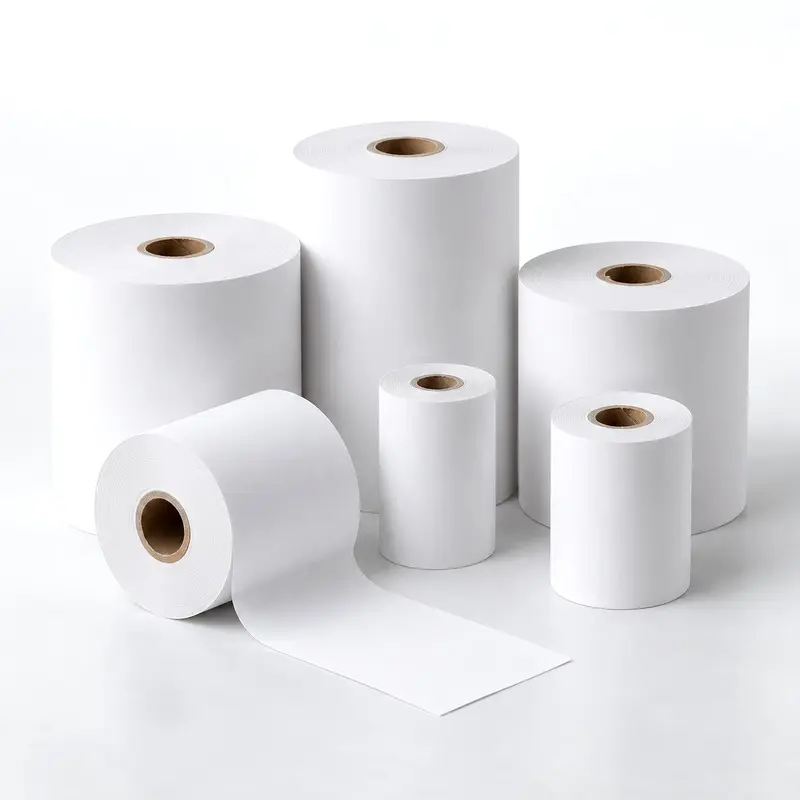
Working with a manufacturer can provide more than a lower initial quotation. It can also make sourcing more predictable when a business needs consistent quality and regular shipments.
Direct Access to Production Information
A manufacturer can explain available paper grades, production specifications, customization possibilities, and quality-control procedures. This is particularly useful for distributors supplying different customer segments.
More Consistent Product Specifications
Long-term buyers need repeat orders to match previously approved samples. Working directly with the factory makes it easier to document specifications and communicate changes before production begins.
Support for Private-Label and Wholesale Orders
Many distributors prefer selling products under their own brand. A manufacturer with printing and packaging capabilities can help prepare branded products for local markets. Buyers should confirm artwork requirements, minimum order quantities, and sample approval procedures before starting production.
Better Planning for Repeat Orders
A reliable factory relationship can support production planning, stock management, and scheduled shipments. This is important for businesses that supply supermarkets, restaurant chains, payment providers, and other customers with continuous paper requirements.
How to Evaluate a Thermal Paper Roll Manufacturer in China
China is an important sourcing market for thermal paper products, but buyers should evaluate manufacturers carefully. A professional supplier should be able to provide clear product information, samples, and transparent commercial terms.
Consider the following points before selecting a factory:
Manufacturing capabilities: Check whether the company operates its own coating, slitting, converting, printing, or packaging facilities. A supplier with relevant in-house production capabilities may offer better control over the manufacturing process.
Product range: A manufacturer offering multiple roll sizes and related products may be better suited to distributors with different customer requirements.
Quality-control procedures: Ask how the factory checks paper thickness, roll dimensions, coating consistency, printing clarity, and packaging quality.
Sample availability: Request samples before approving a bulk order. Test them using the printers commonly used by your customers.
Export experience: Confirm whether the supplier can prepare export documentation, arrange international shipments, and provide realistic delivery estimates.
Communication and after-sales support: Clear responses and documented order specifications are important, especially when handling customized or repeat orders.
SailingPaper: Factory-Direct Thermal Paper Roll Solutions
For wholesalers, distributors, and businesses looking for a manufacturing partner, SailingPaper provides thermal paper rolls and related paper products for different commercial applications.
The company describes itself as a China-based thermal paper and label manufacturer with more than 19 years of production experience. Its product range includes 80mm and 57mm thermal rolls, custom thermal paper, ATM paper, ECG paper, cinema tickets, and jumbo rolls. SailingPaper also describes its manufacturing operations as including coating and converting facilities, supporting bulk wholesale and OEM requirements.
Businesses can explore the SailingPaper thermal paper rolls product range to review available options and identify products suited to their printers and distribution requirements.
For buyers comparing a thermal paper roll factory direct price, the important step is to provide accurate specifications and request a quotation based on the actual order. This helps ensure that the quoted price reflects the required paper grade, roll dimensions, packaging, and quantity rather than an unrelated standard product.
How to Calculate the Real Cost of a Wholesale Thermal Paper Order
The quoted price per roll is only one part of the total purchasing cost. Importers and distributors should consider the complete landed cost before choosing a supplier.
A basic calculation includes:
Total landed cost = Product cost + Packaging cost + Freight + Insurance + Customs duties and taxes + Other applicable charges
For example, a supplier may offer a lower unit price but charge more for customized packaging or international freight. Another manufacturer may quote a slightly higher product price but provide more suitable packaging, better quality consistency, or a more efficient shipping arrangement.
Buyers should also consider the number of usable metres per roll. Two products with the same external dimensions may contain different paper lengths. Comparing only the number of rolls can therefore produce misleading results.
A useful comparison should include:
- Price per roll
- Paper GSM and grade
- Roll width and diameter
- Actual paper length
- Core dimensions
- Packaging quantity
- Minimum order quantity
- Shipping terms and delivery costs
This approach gives purchasing teams a more realistic picture of the value offered by each supplier.
Common Mistakes to Avoid When Buying Thermal Paper Rolls Wholesale
Even experienced distributors can face sourcing problems when important specifications are overlooked.
Choosing a Supplier Only Because of the Lowest Price
An unusually low quotation may involve thinner paper, inconsistent coating, shorter roll lengths, or packaging that is unsuitable for export. Always compare product specifications and test samples before confirming an order.
Ignoring Printer Compatibility
A roll must fit the printer correctly. Incorrect width, diameter, or core size can lead to feeding issues, wasted paper, and customer complaints. Confirm compatibility with the intended printer models.
Failing to Approve a Sample
Product images and written descriptions cannot fully demonstrate print quality. A physical sample allows buyers to check paper appearance, printing clarity, roll winding, and printer performance.
Not Confirming Shipping Terms
The product quotation may not include freight, insurance, customs charges, or local delivery. Ask the supplier to clarify the quotation basis and which costs are included.
Ordering Without a Repeat-Supply Plan
Distributors serving regular customers should consider lead times and stock requirements. Discuss repeat-order arrangements and production capacity before relying on a supplier for ongoing business.
Questions to Ask Before Requesting a Factory-Direct Quotation
To receive a useful quotation, buyers should provide clear information instead of simply asking for the cheapest thermal paper rolls.
Consider sharing the following details:
- Required roll size: For example, 80 × 80 mm or 57 × 50 mm.
- Paper GSM: Specify the preferred paper weight or ask the manufacturer to recommend a suitable grade.
- Roll length: State the required paper length in metres or feet.
- Core size: Confirm the internal diameter and material requirements.
- Paper type: Explain whether standard or specialized thermal paper is needed.
- Packaging: Specify individual wrapping, shrink packaging, carton quantities, or private-label requirements.
- Order quantity: Provide the estimated number of rolls or cartons.
- Destination country: This helps the supplier estimate shipping options and delivery costs.
Providing these details allows manufacturers to prepare more accurate quotations and recommend suitable products.
Frequently Asked Questions
What is the advantage of buying thermal paper rolls directly from a factory?
Factory-direct sourcing can reduce intermediary costs and give buyers direct access to product specifications, customization, samples, and production information. The actual savings depend on order size, product requirements, and shipping expenses.
Which thermal paper roll sizes are most commonly used?
The 80mm and 57mm formats are widely used in retail, restaurants, payment terminals, and billing systems. However, the correct size depends on the printer model and its supported roll dimensions.
Does higher GSM always mean better thermal paper?
No. GSM measures paper weight, not overall printing quality. Coating performance, sensitivity, smoothness, and resistance to fading are also important factors.
Can thermal paper rolls be customized with a company logo?
Many manufacturers offer printed rolls, branded packaging, and private-label services. Buyers should confirm the available printing options, artwork requirements, and minimum order quantity before production.
How can buyers compare thermal paper factory prices accurately?
Compare products with the same dimensions, GSM, paper length, core size, packaging, and shipping terms. This prevents misleading comparisons between products that are not equivalent.
Should I request samples before placing a bulk order?
Yes. Testing samples helps verify printer compatibility, printing clarity, paper quality, and roll dimensions before committing to a large purchase.
Conclusion
Finding a competitive thermal paper roll factory direct price involves more than choosing the lowest quotation. Buyers need to consider paper quality, GSM, roll dimensions, production capacity, customization, packaging, and international delivery costs. A supplier that offers consistent specifications and dependable communication can provide better long-term value than a cheaper source with uncertain quality.
For wholesalers, importers, and distributors, working directly with an experienced manufacturer can simplify sourcing and support more predictable repeat orders. By comparing equivalent specifications, testing samples, and confirming the complete landed cost, businesses can make more informed purchasing decisions and build a dependable thermal paper supply chain.

