

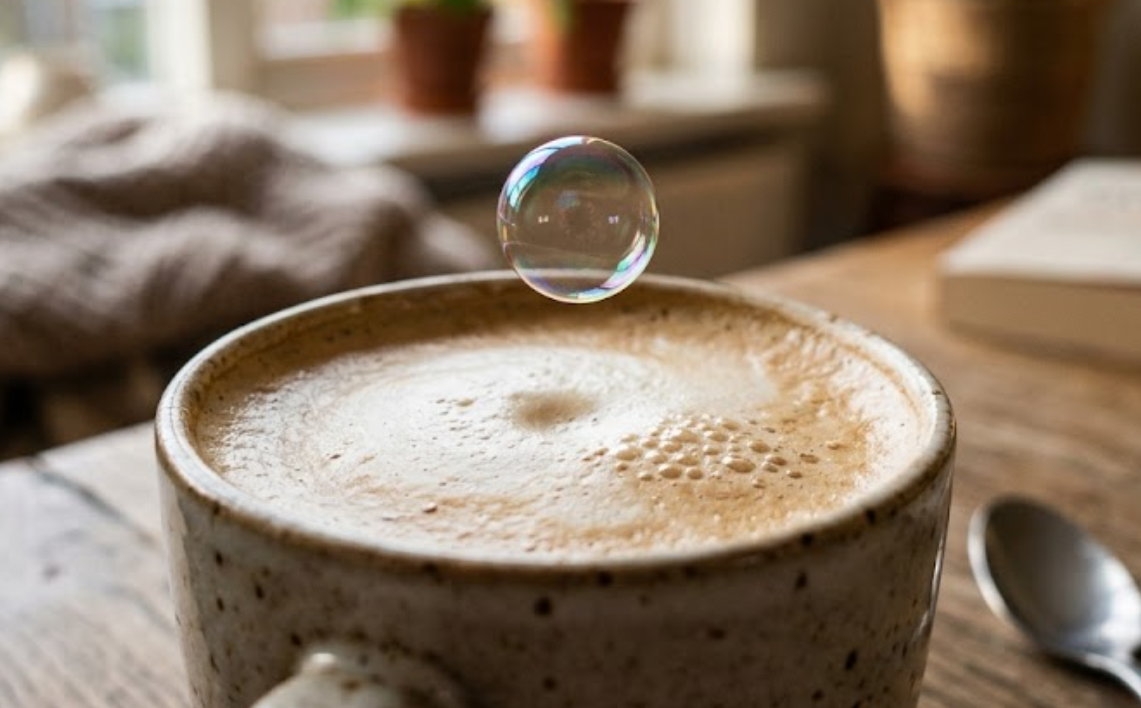
Have you ever found yourself staring blankly at a rain-streaked window, or perhaps at the frothy surface of a freshly poured latte, and noticed something so microscopic yet utterly mesmerizing that it completely derailed your train of thought? We’ve all been there. It’s those tiny, fleeting moments of quiet wonder that keep life interesting.
In a world that constantly screams for our attention with massive billboards, oversized tech, and grand gestures, there’s an unspoken magic hiding in the minuscule. Enter the concept of the babybelletje.
Whether you speak a bit of Dutch or are just a fan of words that sound like a gentle lullaby, this term captures something uniquely beautiful. Roughly translated as a “baby bubble” or a “tiny little bubble,” a babybelletje isn’t just a physical phenomenon; it’s a whole mood. Let’s dive deep into why these miniature spheres hold such a massive grip on our collective imagination.
## Introduction ##: What on Earth is a Babybelletje?
To truly appreciate a babybelletje, you have to slow down your frantic scrolling and look at the world through a macro lens. Think about the last time you washed the dishes. Amidst the heavy, suffocating mountain of suds, did you spot that one perfect, crystalline, microscopic sphere drifting lazily into the air before vanishing into nothingness? That right there—that’s a babybelletje.
It’s the underdog of the bubble world. It doesn’t have the dramatic, iridescent swagger of a giant, soapy orb blown from a plastic wand at a summer park. Instead, it thrives in simplicity. It’s the solitary bubble clinging to the side of your sparkling water glass, the delicate froth on top of a perfectly pulled espresso, or the tiny pocket of air trapped in a glass paperweight.
But why do our human brains find these tiny spheres so oddly satisfying? Why do they make us feel a sudden pang of warmth and nostalgia?
The Science and Psychology of Micro-Wonders
believe it or not, there is actual science behind why human beings are hardwired to love small, round things. Sitting at the intersection of evolutionary psychology and physics, the babybelletje taps into some deeply rooted instincts.
The “Cute” Factor (Baby Schema)
Ever wonder why we gasp when we see a tiny puppy or a miniature teapot? Evolutionary biologist Konrad Lorenz coined the term Kindchenschema (baby schema), which describes a set of physical features—like a round face, big eyes, and soft edges—that trigger a nurturing response in humans.
When applied to inanimate objects, a perfectly round, fragile little babybelletje triggers that exact same psychological response. It’s small, it’s vulnerable, and it demands absolutely nothing from us except to be admired for the briefest fraction of a second.
The Physics of Perfections
From a purely scientific standpoint, a bubble is a masterclass in structural engineering. It is nature’s way of finding perfect equilibrium.
- Surface Tension: The molecules of the liquid trap air and pull inward to create the tightest possible shape.
- Minimal Surface Area: A sphere holds the maximum amount of volume with the least amount of surface area.
When a bubble is scaled down to a babybelletje, its surface tension is incredibly strong relative to its mass. This makes it surprisingly resilient compared to its giant, wobbly counterparts, allowing it to sit precariously on surfaces like a tiny glass bead.
Finding Your Zen: The Babybelletje as a Mindfulness Tool
Let’s face it: life in the 2020s is an absolute whirlwind of notifications, deadlines, and existential dread. Burned out and exhausted, finding peace can feel like just another chore on our to-do list. But what if the antidote to stress isn’t a weekend at an expensive spa, but rather a shift in perspective?
Focusing on a babybelletje can act as an accidental micro-meditation. Because they are so small and short-lived, catching sight of one forces you entirely into the present moment.
“To see a world in a grain of sand and a heaven in a wild flower…”
— William Blake (and honestly, he definitely would have included a babybelletje if he knew the word).
How to Practice “Bubble Mindfulness”
- The Coffee Ritual: Next time you pour milk into your morning coffee, don’t just gulp it down while reading emails. Look for the tiny pockets of air forming on the surface. Watch how they cluster together.
- The Rainy Day Scan: Look at raindrops hitting a puddle. For a split second, tiny air pockets are trapped under the water’s surface. See how many you can count before they burst.
- The Dishwashing Escape: Turn a mundane chore into a sensory experience. Let your eyes focus exclusively on the smallest bubbles in the sink rather than the pile of plates.
The Cultural Impact: From Nostalgia to Modern Design
Though the word itself feels deeply rooted in European charm, the essence of the babybelletje transcends borders. It evokes memories of childhood afternoons spent blowing soapy water through a plastic ring, competing to see who could make the smallest bubble cluster.
In Art and Glassblowing
Artists have been obsessed with capturing the transient nature of bubbles for centuries. In 17th-century Dutch Vanitas paintings, bubbles were frequently used as symbols of memento mori—reminders of the shortness and fragility of human life.
In modern times, glass blowers intentionally leave deliberate imperfections, known as “seed bubbles” or a controlled babybelletje, inside solid glass sculptures. These tiny trapped spheres catch the light in breathtaking ways, turning a solid piece of heavy glass into something that feels airy, fluid, and alive.
The Aesthetic of the Micro-Bubble in Culinary Arts
If you’ve ever eaten at a high-end restaurant, you’ve likely encountered molecular gastronomy. Chefs love utilizing foams and “airs” to deliver intense flavors without adding heavy textures to a plate.
| Culinary Context | Purpose of the Bubble | Experience |
| Champagne Fine Beads | Enhances aroma release and creates a smooth mouthfeel. | Luxurious, crisp, and tingling. |
| Espresso Crema | Signals a properly extracted coffee bean with rich oils. | Velvety, bitter-sweet, and aromatic. |
| Molecular Foams | Adds a burst of flavor (like citrus or truffle) that melts instantly. | Ethereal, surprising, and light. |
## FAQs ## About the Wonderful World of Tiny Bubbles
Why do tiny bubbles last longer than big bubbles?
It all comes down to internal pressure and evaporation. Because a babybelletje has a much smaller surface area, it evaporates at a slower rate relative to its volume. Furthermore, its small size means it’s less susceptible to air currents and gravity pulling the liquid downward, which is usually what causes giant bubbles to thin out at the top and pop.
Can you create a permanent babybelletje?
In a standard soap-and-water environment, no—evaporation will always win in the end. However, scientists and material designers have created “liquid marbles” and micro-plastics that mimic the exact geometry of a miniature bubble but use polymers or nano-particles to lock the structure in place permanently.
Is there a specific formula for making tiny bubbles?
While giant bubbles require heavy ingredients like glycerin or guar gum to strengthen the film, making microscopic bubbles is actually much easier. High-vibration environments—like whisking a liquid vigorously, using an ultrasonic cleaner, or using a high-pressure nozzle—naturally break down air pockets into thousands of miniature spheres.
Why do bubbles always cluster together?
This is due to a phenomenon physicists call the “Cheerio Effect.” Named after the way breakfast cereal clumps together in a bowl of milk, it occurs because floating objects gently deform the surface of the liquid, causing nearby floating objects to slide down into the mini-depressions and stick together.
Conclusion: Celebrating Life’s Smallest Wonders
At the end of the day, a babybelletje is a beautiful, poetic reminder that some of the most captivating things in life don’t last forever—and that’s precisely what makes them special. They don’t demand your attention, they don’t ask to be saved, and they don’t care if you miss them. They simply exist to bring a flash of geometric perfection to an otherwise chaotic world.
So, the next time you feel overwhelmed by the sheer scale of your everyday problems, take a deep breath. Look around. You might just spot a lone, shimmering babybelletje floating across your field of vision, reminding you to slow down, take a breath, and appreciate the fleeting beauty of the right here, right now. After all, isn’t life just a collection of tiny, beautiful moments waiting to burst?

