

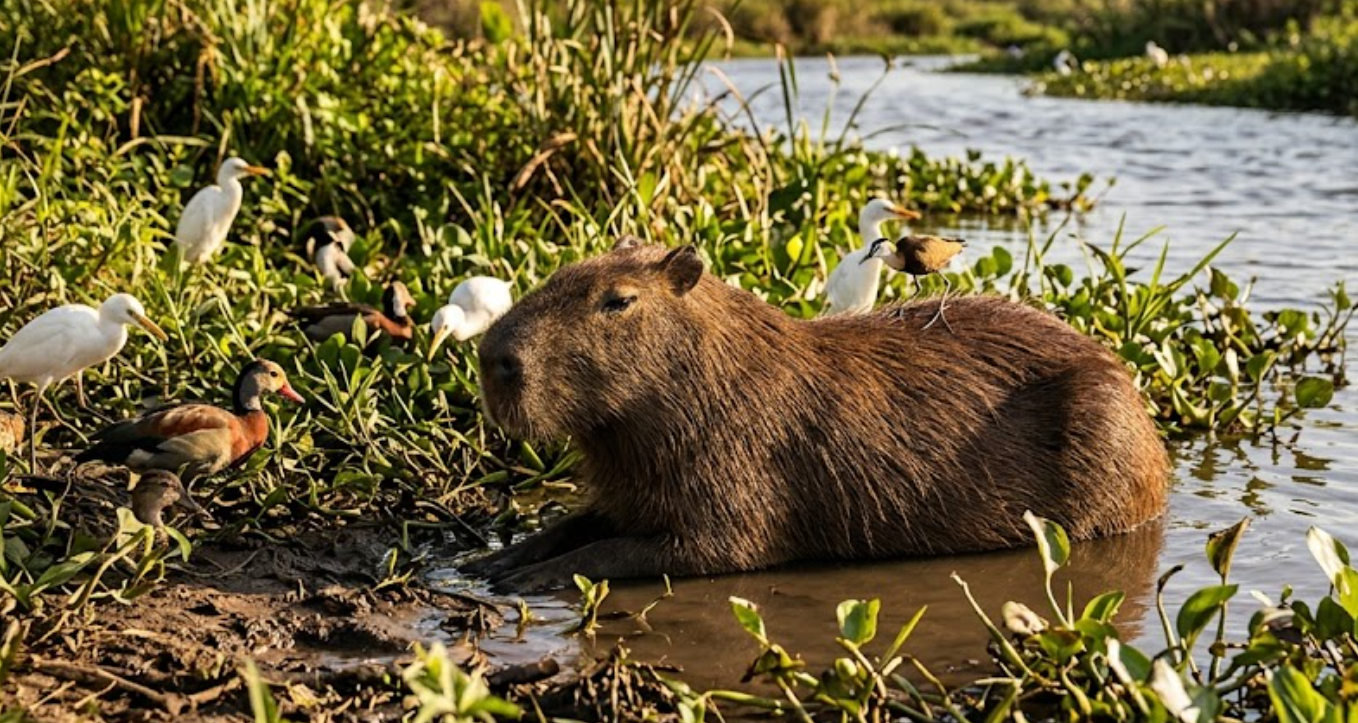
Imagine stepping into a sun-drenched wetland, the air thick with the scent of damp earth and wild grass. Suddenly, out of the reeds steps a creature that looks like a cross between an oversized guinea pig and a tiny, gentle bear. It blinks sleepily, plops down into the mud, and immediately becomes surrounded by a flock of ducks, a baby alligator, and a couple of stray birds. Welcome to the world of the cadibara (commonly known in scientific circles as the capybara).
These oversized rodents have completely captured the internet’s imagination, transforming from obscure South American mammals into global icons of pure, unadulterated chill. But what is it about them that makes everyone, from hard-boiled internet trolls to actual wild predators, want to pull up a seat and hang out? Let’s dive deep into the fascinating world of the cadibara and figure out what makes them tick.
The Creature, The Myth, The Legend: What Exactly is a Cadibara?
To understand why everyone is so obsessed, we’ve got to get down to the basics. Standing about two feet tall at the shoulder and tipping the scales at up to 150 pounds, the cadibara holds the undisputed title of the world’s largest living rodent.
A Semi-Aquatic Masterclass
Don’t let their bulky, barrel-shaped bodies fool you; these guys are built for the water. With webbed feet and facial features—eyes, ears, and nostrils—positioned right on top of their heads, they can swim with the grace of a hippo. In fact, they can stay submerged for up to five minutes at a time to dodge predators!
The Ultimate Herbivore Diet
Having continuously growing teeth is a classic rodent trait, and this creature uses them to absolute perfection. They are strict vegetarians, munching on:
- Water plants and aquatic grasses
- Grains and reeds
- Bark from young trees
- The occasional piece of fallen fruit
Funnily enough, they’re also known to eat their own droppings in the morning. Gross? Sure. But it’s actually a brilliant evolutionary hack to digest the tough cellulose in their grassy diet twice and pull out every single nutrient. Talk about recycling!
Why Does Every Animal Seem to Love the Cadibara?
If you’ve spent more than five minutes scrolling through social media, you’ve probably seen pictures of these creatures serving as literal couches for other animals. Cats, monkeys, birds, and even crocodiles have been spotted just lounging on top of them. But why on earth does this happen?
   [ The Anatomy of a Perfect Friend ]

   +------------------------------------+
   |  Thick, Dense Fur                  | ---> Perfect perch for birds/monkeys
   |  Warm Body Temperature             | ---> Natural heater for smaller animals
   |  Zero Defensive Vibrations        | ---> Predictable, non-threatening energy
   |  Alert, Semi-Aquatic Sentinel      | ---> Keeps an eye out for shared predators
   +------------------------------------+
The Ultimate “Zen” Energy
Unlike most wild animals that are constantly on high alert, jumping at every snapped twig, this giant rodent operates on a completely different frequency. They possess an incredibly low-key, non-threatening demeanor. Because they rarely show aggression unless cornered, other animals naturally feel safe around them.
A Walking Ecosystem
Basking in the sun all day, their thick, coarse fur becomes a literal paradise for birds looking for a quick snack of ticks and bugs. It’s a classic scratch-my-back, scratch-yours scenario. The birds get a free buffet, and our furry friend gets a free grooming session.
Living the Wet Life: Habitat and Daily Routine
You won’t find these guys hanging out in dry deserts. They are deeply tied to the water, claiming the lush riverbanks, swamps, marshes, and flooded savannahs of South America as their home turf. From the vast Llanos of Venezuela to the sprawling Amazon basin, water is their sanctuary.
A Day in the Life
What does a typical Tuesday look like for them? Well, it’s a tough life, but somebody has to live it:
- Morning Grazing: Waking up early to beat the heat, they spend the morning hours filling up on fresh grasses.
- The Midday Soak: As the sun starts beating down, they head straight into the water to cool off, often taking long naps while floating perfectly still.
- Social Hour: Late afternoon is all about grooming each other, communicating in a bizarre language of clicks, whistles, and barks, and keeping the herd tight-knit.
The Social Structure: Power in Numbers
You will almost never see a solitary individual wandering the wild. They are intensely social creatures, living in tight herds that usually number between 10 and 30 individuals, though these groups can swell to a massive 100 members during the dry season when water is scarce.
The Domination Game
Each herd is led by a dominant male who has to constantly defend his title from younger challengers. He uses special scent glands on his nose (called a morrillo) to rub against trees and grass, effectively plastering his name all over the territory.
It Takes a Village
When it comes to raising the young, they practice communal parenting. A single female gives birth to a litter of about four pups, but once those babies are out and about, any nursing mother in the herd will feed them. While the adults are busy grazing, one or two babysitters stay behind to watch the nursery. It’s an incredibly efficient strategy for keeping the little ones safe from hungry jaguars and caimans.
From the Wild to the Web: The Pop Culture Phenomenon
How did a giant, mud-loving rodent become one of the biggest pop culture icons of the 2020s? It all comes down to their sheer, hilarious relatability. In a world full of hustle culture, endless notifications, and high anxiety, the cadibara represents the exact opposite: absolute stillness.
The Meme Supremacy
From viral TikTok videos set to catchy, repetitive songs to endless reaction memes representing “unbothered” energy, they have become a shorthand for peak mental health. They are the living embodiment of the phrase “don’t worry, be happy.”
Pet Popularity: A Cautionary Tale
Because of their internet fame, tons of people have wondered: Can I keep one as a pet? While they are incredibly gentle and can be tamed, keeping one in a standard backyard is almost always a terrible idea. They need massive amounts of space, a literal swimming pool to keep their skin from drying out, and a constant supply of companions. Without a herd, they can become deeply depressed. For almost everyone, it’s best to admire them from afar!
Frequently Asked Questions (FAQs)
Are cadibaras dangerous to humans?
Not at all! They are naturally incredibly docile and prefer to flee into the water rather than fight. However, like any wild animal, they do have very sharp, strong teeth and might bite if they feel cornered, threatened, or if someone tries to mishandle their babies.
How long do they live?
In the wild, life can be pretty tough due to predators like jaguars, anacondas, and eagles, so they usually live around 4 to 8 years. In captivity or well-managed sanctuaries where they don’t have to worry about being hunted, they can comfortably reach up to 12 years of age.
Can they communicate with each other?
Yes, and they are surprisingly noisy! They use a complex mix of sounds to talk to their herd. If a predator is nearby, they’ll emit a loud, dog-like bark to warn everyone to run for the water. When they’re just hanging out and happy, they make low purrs, whistles, and clicking noises.
Is the cadibara endangered?
Fortunately, no. They are currently classified as a species of “Least Concern” by conservationists. They breed quickly and are highly adaptable to changing environments, though deforestation and water pollution in their native South American habitats still pose real challenges for them.
Conclusion: Lessons in Chill from a Giant Rodent
At the end of the day, our fascination with this wonderful creature says just as much about us as it does about them. In a frantic, fast-paced world, looking at an animal that actively chooses peace, community, and an afternoon soak above all else is incredibly refreshing.
They don’t fight the currents of life; they just float right along with them. Whether they’re acting as a pillow for a sleepy duckling or just munching on some river grass, the cadibara reminds us all to take a deep breath, slow down, and maybe, just maybe, learn to co-exist a little more peacefully with the wild world around us. So, the next time you feel stressed out, just channel your inner giant rodent, find your metaphorical puddle, and let the worries of the day float away.

